
Leak Testing Autoinjectors Managing Risk in the Most Complex Combination Device Format
Leak Testing สำหรับ Autoinjector: ควบคุมความเสี่ยงในอุปกรณ์ที่ซับซ้อน
Autoinjector เป็นอุปกรณ์ทางเภสัชกรรมที่มีความซับซ้อนสูง เนื่องจากรวมทั้ง ภาชนะบรรจุยาแบบปลอดเชื้อ และ กลไกการฉีดยาอัตโนมัติ เข้าไว้ในระบบเดียว ทำให้การทดสอบการรั่ว (CCI: Container Closure Integrity) มีความสำคัญมากกว่าระบบ syringe ทั่วไป
การเพิ่มขึ้นของชิ้นส่วน จุดเชื่อมต่อ และกระบวนการประกอบ ทำให้ความเสี่ยงของการรั่วเพิ่มขึ้นอย่างมีนัยสำคัญ ดังนั้นการทดสอบเฉพาะตัว syringe เพียงอย่างเดียวจึงไม่เพียงพอ การตรวจสอบที่แม่นยำต้องทำกับ อุปกรณ์ที่ประกอบเสร็จสมบูรณ์ (Fully Assembled Autoinjector) เพื่อให้มั่นใจในความปลอดเชื้อและคุณภาพของผลิตภัณฑ์ในระยะยาว
Autoinjector ส่วนใหญ่มีปริมาตรขนาดเล็ก (เช่น 1 mL หรือ 2.25 mL) และมักเป็นยากลุ่ม biologics ที่มีความไวสูง จึงต้องใช้เทคนิคการทดสอบที่มี ความละเอียดและความไวสูงมาก (High Sensitivity Leak Detection) เพื่อป้องกันความเสียหายที่อาจเกิดขึ้นระหว่างการจัดเก็บ การขนส่ง และการใช้งานจริง
แม้ว่าในขั้นตอนพัฒนาผลิตภัณฑ์ การทดสอบ syringe ด้วยเทคนิค เช่น Helium Leak หรือ HVLD จะช่วยยืนยันคุณภาพของตัวภาชนะได้ แต่ยังไม่สามารถยืนยันได้ว่า ระบบ autoinjector ทั้งหมดจะคงความสมบูรณ์หลังการประกอบ
ดังนั้น แนวทางที่ดีที่สุดคือการทำ Leak Testing ในระดับ ระบบสำเร็จรูปทั้งชุด เพื่อให้มั่นใจว่าอุปกรณ์สามารถรักษาความปลอดเชื้อได้ตลอดอายุการใช้งาน และพร้อมใช้งานได้อย่างปลอดภัยในทุกสถานการณ์
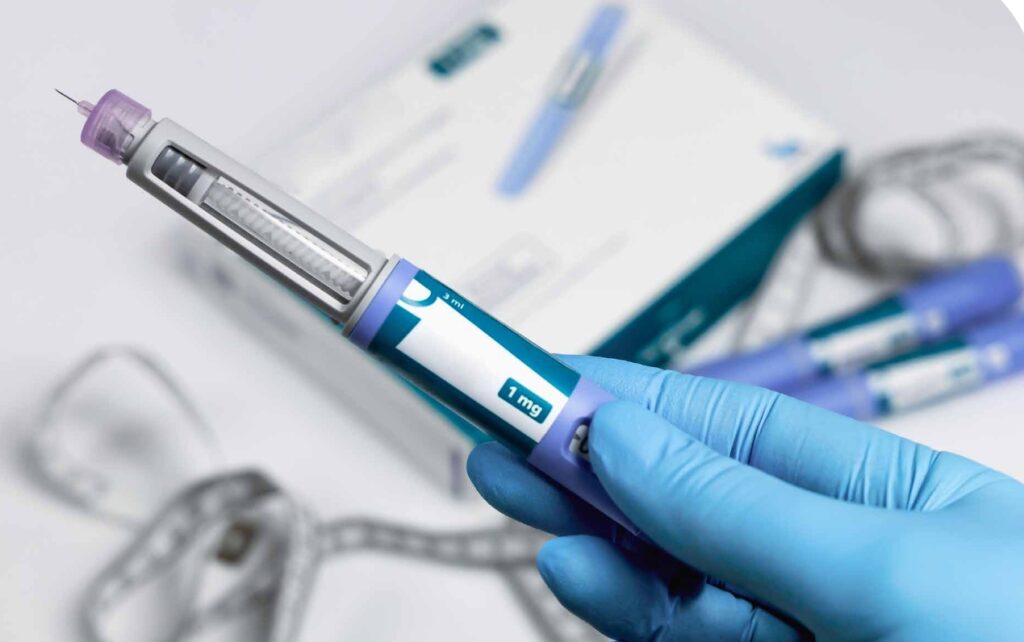
Autoinjectors represent one of the most complex and risk-laden combination devices in pharmaceutical
manufacturing. Unlike conventional parenteral presentations, autoinjectors integrate a sterile primary
container with a mechanical delivery system designed to ensure a safe and correct dose delivery by the
patient. This complexity fundamentally changes how container closure integrity (CCI) should be evaluated.
Leak testing an autoinjector is not simply an extension of syringe testing. It is a distinct inspection challenge
driven by a significant increase in components, interfaces, and process variables that are introduced during
final assembly. As a result, the most meaningful assurance of sterility and long-term product quality can only
be achieved by inspecting the fully assembled device together.
The Autoinjector Format: Small Volumes, High Sensitivity Requirements
Most autoinjectors on the market today are based on familiar parenteral formats: 1 mL long syringes, 2.25
mL syringes, or cartridge-based systems. These products are exclusively liquid, sterile, and frequently large-
molecule, demanding the highest levels of leak-test sensitivity to ensure sterility over the shelf life.
The risk profile of these products is amplified by patient use. Autoinjectors are often stored for extended
periods, transported across variable environments, and relied upon in critical care scenarios. The opportunity
for a defect to propagate into a critical failure is significant.
Validating the Syringe: Necessary, but Not Sufficient
Early in development, CCI validation appropriately focuses on the inherent leak of the primary container.
Methods such as helium leak detection and high-voltage leak detection (HVLD) are well-suited for this stage.
These techniques excel at evaluating the design space of the syringe itself, helping teams understand material
selection, stopper performance, seal integrity, and intrinsic barrier properties.
At this point, the syringe is a relatively simple system comprising of three to four critical components. Testing
the standalone syringe provides high-value insight into container design robustness and establishes a baseline
level of integrity performance. However, this testing answers only one question: Is the container design
fundamentally sound?
It does not address the far more consequential question that emerges later in the process: Does the final
assembled autoinjector reliably maintain that integrity?
